Saturday, July 28, 2007

[204.1] STRIGGIO 40-PART MASS

Thanks to Deirdre Good for drawing my attention to this - missed in the rush to get ready for my US trip. "The rediscovery of the gigantic Mass in forty parts by Alessandro Striggio (1536-1592), lost since 1726, sheds important light on the connections between music and politics in the sixteenth century. Dating from 1566-7, it is one of the most extravagant pieces ever composed in the history of music. Here's a link to the lecture recounting the discovery by Professor Davitt Moroney, University of California, Berkeley."

From The Guardian review of the BBC Prom earlier this month: "Thomas Tallis may have written his revered 40-part Spem in alium motet after meeting the Mantuan composer Alessandro Striggio in London in 1567. Perhaps Tallis even took as a model Striggio's own 40-part mass Ecco si beato giorno, which in its final Agnus Dei rises to 60 parts. For centuries, the missing link in this theory was Striggio's lost mass itself; its rediscovery is an astonishing moment in musicological history. Unveiled in this late-night Prom by the augmented Tallis Scholars, possibly for the first time in half a millennium, Striggio's work is a masterpiece; richer and more extravagant than Tallis's more austerely English motet, but more than fit to be mentioned in the same breath as twin landmarks of 16th-century polyphony."

And here's the choral wiki for Ecce beatam lucem.

Comment on this post: NewFrontEars

Friday, July 27, 2007

[203.1] SINGING FOR A CHANGE

At this year’s WOMAD world music, arts and dance festival (27-29 July 2007) UK-based international development agency Christian Aid is asking visitors to join its 'Climate Changed' campaign as they listen to acts from developing countries which are struggling to adapt to the devastating effects of climate change.

Nazmul Chowdhury from Practical Action in Bangladesh, said: "Forget about making poverty history. Climate change will make poverty permanent."

More information here.

Comment on this post: NewFrontEars

Thursday, July 26, 2007

[202.1] LISTENING RIGHT NOW

... to Kodaly (in his most lyrical phase) and, before that, some wondrous excerpts from Bela Bartok's Microcosmos - in a New York apartment, on a warm day with a beautiful blue sky visible through the wide windows. On piano, though it could also be on a harpsichord. Here's a Summer present for you, then: Bela Bartok. MIDI (free download) & MIDI/ZIP.

Comment on this post: NewFrontEars

Saturday, July 21, 2007

[201.1] DISAPPEARING YOUTUBE

Loads of interesting stuff in the jazz and rock areas has disappeared off YouTube, thanks to the pointless greed of ViaCom and other 'majors' - who are mostly not preserving profits, but denying potential purchasers a chance to sample music they might not otherwise contemplate. But whatever. There's a lot less 'classical' and new music. But thankfully these Michael Tippett clips, which I mentioned last year, are still around. At the last time of checking.

Tippett rehearsing the Leicestershire Schools Symphony Orchestra in the Ritual Dances; Tippett rehearsing the Leicestershire Schools Symphony Orchestra in Cockaigne; Tippett rehearsing the Leicestershire Schools Symphony Orchestra in Suite in D and Nimrod; Tippett rehearsing the Leicestershire Schools Symphony Orchestra in Putnam's Camp.

Comment on this post: NewFrontEars

Monday, July 16, 2007

[200.1] HISTORIC PROMS PARTNERSHIP CELEBRATED

The BBC Proms classical music festival (sadly still best known for its jingoistic last night - but hugely brader in scope, not least in popularising new music) has kicked off the 12th and final BBC season curated by outgoing director Nicholas Kenyon.

It is being described as a celebratory season that marks the 80th anniversary of the partnership between the Proms and the BBC. While referencing the past, it looks to creating the music and performers of the future through concerts and broadcasting.

There are many new works (including 12 BBC commissions), and what the BBC calls "unparalleled opportunities for talented young performers as well as more ways than ever for a new generation to get involved."

In just two months the season spans eight centuries of music in 90 concerts. From the 13th-century Icelandic sagas that inspired Wagner, to the rediscovery of a lost Renaissance Mass, through the Baroque genius of Handel, Bach and Rameau, to the great orchestral repertory from the 19th, 20th and 21st centuries (including new commissions), the music is performed by leading artists from across the globe.

Nicholas Kenyon says: "I hope that BBC Proms 2007, 80 years after the BBC took over this great concert series, is as exciting and innovative a season as it has ever been.

"In my final season I am especially pleased at the huge range of major orchestras and events, the new works, and the unequalled opportunities to hear the very best of young musicians.

"From an extraordinary Venezuelan youth orchestra to our own National Youth Orchestra, young brass players making music alongside the BBC Philharmonic on Brass Day, and talented young singers – found in a nationwide talent search – singing Rachel Portman's dramatic new piece about climate change. The future of classical music is right here at the BBC Proms."

Comment on this post: NewFrontEars

Sunday, July 08, 2007

[199.1] MUSIC WITH PASSION

Darn, I've just missed Private Passions on BBC Radio 3 again. Still, there's always Listen Again. It's a great programme, hosted by a contemporary clasical composer with an eclectic range of interests and guests. And it is so much better than its analogue Desert Island Discs, because the people invited to participate are always those for whom music is central rather than decorative in their lives.

"Michael Berkeley's guest this week is US-born jazz trombonist, conductor and composer Scott Stroman, who is currently Head of Jazz Studies at the Guildhall School of Music and Drama. His wide-ranging musical tastes are reflected in his choices, which include music by Duke Ellington, Dizzy Gillespie and Charles Mingus (of course) alongside a Bach suite, a Beethoven string quartet, a movement from Haydn's Symphony No 99 and an extract from Stravinsky's ballet Apollon musagete." [Pic: M. Berkeley]

Comment on this post: NewFrontEars

Saturday, July 07, 2007

[198.1] LIVE EARTH... SOME LIKE IT HOT

Well, I was intending to write about Ian Bostridge on Handel. More of that later. Meanwhile, in the midst of catching up with some writing, I've been on-and-off watching the BBC broadcast of today's Live Earth concerts across the world - a noble effort to mainstream concerns about global warming and Al Gore's necessarily ambitious seven-point programme to tackle the human impact on climate change. Not much that lands vertically on my musical universe, admittedly. But the Red Hot Chilli Peppers managed to combine rockist sensibilities with some accomplished playing, good use of dynamics (not that easy at the cavernous New Wembley Stadium), high energy material and strong harmonies. Bloc Party are also interesting, and Corinne Bailey Ray brought a beautiful voice and some jazz and soul vibes to the proceedings. Perhaps surprisingly, I also love The Beastie Boys [Mike D, Adrock and MCA, pictured] and their wry, experimental, MC scratch-driven, hard-edged punk rap. The Blues Brothers gone 'Intergallactic' for the C21st. Kinda. Then there's Shakira, whose appeal (like that of the Pussycat Dolls, who actually performed well) is perhaps not exclusively musical. And don't forget the raw, hook-laden power of Foo Fighters' 'Times Like These'. Predictably Gore has been attacked over the environmental impact of an eight gig satellite linked event for an eco-cause. He has hit back. Let's put it this way. The nay-sayers are not motivated by compassion.

Comment on this post: NewFrontEars

Friday, July 06, 2007

[197.1] BACH TO THE FUTURE

Sidewalk Dances: 14 Moondog pieces has now been available in the shops for a few months. Sidewalk Dances was performed by Britten Sinfonia, pianist Joanna MacGregor and saxophonist Andy Sheppard in last year's (2006) London Jazz Festival. Read press reviews. The Britten Sinfonia website [see its left-hand column] has put up an online video, 'Bach meets Moondog' - a wonderful pairing of music from the Baroque master and the underground American street musician who has become legendary in new music circles. Somewhat reminds me of the curious Handel and Hendrix festival pairing a few years ago, based on the London House that both occupied in Brook Street, now the Handel House Museum.

Comment on this post: NewFrontEars

Wednesday, July 04, 2007

[196.1] CELEBRATING ALDEBURGH MUSIC

Interesting piece in the Guardian by Nicholas Kenyon on the Aldeburgh Festival, its antecedents and prospects. See: Flying the flag, 30 June 2007. Inter alia, he notes of one of its leading lights: "It is ironic that, as a composer, Benjamin Britten's commitment to the music of his contemporaries was more equivocal."

"While the Proms of the 1960s under Glock's direction rushed to embrace the continental avant garde, introducing Messiaen, Schoenberg, Varèse, Ives, Stockhausen and Berio to a sometimes stunned metropolitan audience, Aldeburgh's tastes were far more restrained. In the 1950s, Kodály and Poulenc came, and Lennox Berkeley, Malcolm Williamson, Richard Rodney Bennett and Nicholas Maw had new theatre pieces performed. While the Society for the Promotion of New Music was allowed to present small-scale music from the younger avant-garde generation, Britten drew the line at Harrison Birtwistle's violent music-theatre piece Punch and Judy. (Whether he actually walked out of the premiere is debatable, but he clearly disliked the piece and criticised its lack of awareness of operatic tradition.) For all his generosity to young composers, Britten felt increasingly uncomfortable with some of the directions that music was taking.

"... Gradually, the festival worked its way back to find a home for new music and living composers. Oliver Knussen invited Henze (who had already been welcomed by Britten and Pears), Takemitsu, Dutilleux, Magnus Lindberg and others, and the present creative team of Thomas Adès and John Woolrich has made new music and a distinctive vision of the repertory central to its proposition. The creation of the Britten-Pears School transformed the context in which the festival happens, and Aldeburgh Music (as it is now snappily branded) is a round-the-year proposition of huge potential value to the whole east of England, with ambitious plans that will see the rest of Snape Maltings developed over the next two years." [Pic: Aldeburgh view]

Comment on this post: NewFrontEars

Tuesday, July 03, 2007

[195.1] CLICK AND GROOVE LEFT

Nothing at the End of the Lane (electronica / experimental) are well worth a listen on MySpace, which remains a good place to make surprising musical discoveries - usually recommended by friends and associates. In this case, Alexandra Douglass-Bonner. Thanks. NAtEotL cite an interesting range of influences - Masami Akita, Malcolm Clarke, Delia Derbyshire (of BBC Radiophonic Workshop fame), Kevin Drumm, Brian Eno, Philip Glass, Jim O'Rourke, Pierre Schaeffer, Karlheinz Stockhausen, and David Vorhaus. Hhmmnnn... I could detect at least five of them in the excerpts they offer: 'Alone', 'Projections', 'Needles and Crystals', and 'Stepping Stones' (remix).

Comment on this post: NewFrontEars

Sunday, July 01, 2007

[194.1] THE SHOUT AND STREETWISE OPERA

The Shout are back in the rehearsal room and the workshop to prepare for joining with Streetwise Theatre and the Almeida to explore the world of folksong. Streetwise develop creative performing projects with homeless people, and their work to date has won much critical artistic acclaim as well as being acknowledged as some of the most innovative collaboration with those who are homeless.

My good friend and Shout luminary Adey Grummet (pictured) says: "The rather wonderful Emma Bernard will be masterminding the whole event and whatever glorious thing this project ends up being will be performed in the Almeida theatre at 8pm on July 21 and 4pm & 8pm on July 22, 2007.

"The Shout are also currently waiting for the final funding news for their autumn UK tour. A newly devised theatre piece, Fingerprint, also directed by Emma Bernard, it deals with the multilayered and kaleidoscopic aspects of identity. Stay tuned and pray hard for them! Details of all this will be here as well as on The Shout's own website." You can sign up to receive regular info.

Adey was also a leading light on the fabulous Kombat Opera mini-series on BBC2, which will hopefully be re-airing at some point. From the people who (originally) brought you Jerry Springer - The Opera, only even better.

Picture of Adey Grummet (c) Jim Four, 28 Woolwich Road, London SE10 OJU. Used with grateful acknowledgement. Give him some more work now.

Comment on this post: NewFrontEars

Sunday, June 24, 2007

[193.1] POST-ROCK OF AGES

Very well worth delving your ears into on Myspace is Gavin Harrison - O5ric, who operates on the unpoliced borderlands of post-rock and something 'progressive' that really merits that label. The 2007 album is SoulKatcher. Collaborations with Porcupine Tree personnel and Robert Fripp signify the orbit it is resonating in. I'm also listening to the Tree's new disc, the fine Fear Of A Blank Planet right now, as well as contemplating a review of the peerless Joanna Macgregor at the Exeter Festival (Bach's Goldbergs, Piazzola and African-American spirituals). The new Yes documentary from DVD UK is also being viewed with interest...

Comment on this post: NewFrontEars

Thursday, June 21, 2007

[192.1] CONFUSING YOUR EARS AND BRAIN IS FUN

Among the many radio wonders of the web is Difficult Listening, a programme that runs from 9-11.00pm [local time] on Sunday evenings, RTRFM 92.1, Perth, Western Australia. The presenters are Bryce Moore and Sarah Combes. Its remit is: "Music on the edge: contemporary classical, electronic, industrial, ambient, improv, noise, musique concrete, sound art."

Brilliant stuff. I know I've mentioned it on NFE before, but you just can't have too many reminders of a good thing. And while we're about it, RIP-RIG to Radio 3's Mixing It, and shame on them for taking it off rather than re-inventing it. Merd. The blather about it al being part of a grand plan in which the integrity of the music it was showcasing is preserved elsewhere in a careful programming balance is, evidentially speaking, nonsense.

On a happier note, then... this past week's DL schedule includes:

* Tim Brady GO (8'45") Tim Brady, electric guitar, electronic devices CD: GO (Ambiances Magnetiques: AM 156) http://www.actuellecd.com/

* Jim Denley Masahide's Cave (8'47") Jim Denley, alto sax and recording CD: Through Fire, Crevice and the Hidden Valley (Split: 16) http://www.splitrec.com/

* Fetisch Park Suktion (15'39") Carla Subito, Marlon Shy CD: Alluvial (Extreme: XCD 042) http://www.xtr.com/extreme/

These playlists are stored cumulatively, for the past three months, on the website. To receive playlists via email, follow the link on the website. We are always interested in receiving new music for broadcast.

Comment on this post: NewFrontEars

Sunday, June 17, 2007

[191.1] THE ART OF THE MODERN

"I know that if I am true to the music in me, it must be a music of my agonies and your agonies as much as a music of, what shall I say, of heart-easing qualities. And yet I am quite certain in my heart of hearts that modern music and modern art is not a conspiracy, but is a form of truth and integrity for those who practise it honestly, decently and with all their being."

(Sir Michael Tippett)

Tippett forthcoming performances, via Schott.


Comment on this post: NewFrontEars

Saturday, June 16, 2007

[190.1] WELCOME TO THE REVISED NEWFRONTEARS...

After five years (and quite a few haituses over the past couple) this site has had a bit of an overhaul. The links badly need updating and reformatting, I realise. And the archives are a bit less than user-friendly at the moment. But give me time. What would probably be useful would be a section front-archiving all the reviews to save you from floundering around... or giving up in despair. There's actually quite a bit of useful material buried in this blog (which was kind of innovative when it kicked off, actually). But you'd be hard pressed to find it right now, I admit. One obvious piece of advice: use the search facility for specific artists, composers or musical styles. That should throw up a few surprises. Happy hunting, and bear with me.

Comment on this post: NewFrontEars

Thursday, April 12, 2007

[189.1] THE RESONANCE OF COMPASSION

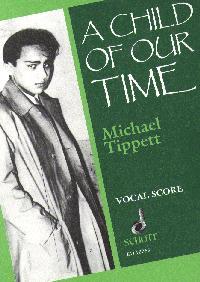
Michael Tippett on the significance of combining the deep melodies of Afro-American spirituals with his own expansive lyricism in the often astringent setting of A Child Of Our Time: "It's a question of survival, if you like, which has become something desperately needed. Also the other element which was so strong is concerned with compassion in a world which is so driven and riven by fratricidal struggle and by self-righteousness of every kind"

Comment on this post: NewFrontEars

Wednesday, December 20, 2006

[188.1] BEYOND THE PALE

A bit outside the usual musical territory of NFE, but I was pleased that former Procul Harum keyboard player Matthew Fisher today won a share in the copyright and royalties of 'A Whiter Shade Of Pale'. It's a great song - an intriguing blend of ballad, Bach and lyrical psychedelia with a fine Hammond M-102 drawbar / Leslie cabinet sound (not the B3, as is often assumed). Fortunately the adjudicator, Justice Blackburne, read music as well as law at Cambridge.To prove his point Fisher [pictured] led the court through what the Daily Telegraph described "a dizzying 40 minutes of bar by bar analysis, picking out quavers, sequences, ascending and descending scales and dissonances." Good on him.

We skipped the light fandango
turned cartwheels 'cross the floor
I was feeling kinda seasick
but the crowd called out for more
The room was humming harder
as the ceiling flew away
When we called out for another drink
the waiter brought a tray

And so it was that later
as the miller told his tale
that her face, at first just ghostly,
turned a whiter shade of pale


Comment on this post: NewFrontEars

Saturday, November 18, 2006

[186.1] HOW MUSIC WORKS

There is plenty of moaning about "the state of music" from those of us who see it as more than a purely consumer-led distraction, and the condition of music education (or lack of it) in schools is also hotly debated. But what, constructively, is being done to address the situation? One person who is using the medium of TV to promote better understanding of music in popular but non-patronising ways is composer Howard Goodall. His latest venture, the series How Music Works (showing for an hour on Channel 4, four Saturdays from 18 November 2006 at 20.25), is an excellent case in point. Tonight's programme explored melody, and included references from classical, blues, Gregorian, African, Asian, jazz and rock idioms. Goodall is a gifted communicator. And the fact that he can genuinely appreciate Sting's adoption of the Dorian mode as well as the intricacies of Bach and the demandingness of Schoenberg really helps. He is not trying to build bridges across divides. He is delving into the multiple musical environments in which he lives, moves and has his being. My own choices of Twentieth Century Greats (2004) would have been different. You can't, in my view, overlook Messiaen. But that series, too, was enlightening and well crafted. More, please.

Comment on this post: NewFrontEars

Wednesday, November 15, 2006

[185.1] MUSICAL THOUGHT CRIMES REVISITED

In the view of many people, there is nothing less musically acceptable than Yes's 1973 four-side near 80-minute epic album, Tales From Topographic Oceans. I couldn't agree less. What gets called 'progressive rock' has committed more than a few atrocities, but this isn't one of them. It's coherent, evocative, complex and brimming with ideas. So it was with delight that I discovered, while surfing on Amazon, that at least one thoughtful reviewer agrees. Dr D. B. Sillars' oeuvre is worth visiting anyway, and here he is on TfTO.

Critics have called this album difficult and stated that there was an overstretching of musical ideas. This is not the case. I think the album evolves naturally over each of its tracks. It is complex, thematically and musically, but I think the whole thing holds together... It has stood the test of time very well. It is the album by [Yes] that I re-visit the most, finding new nuances from each listen. This remaster has done the album the justice it deserves. The sound is full and clear, with all the detail finally brought out of the mix. The studio run-throughs are interesting takes on how the pieces have evolved. The digipak packaging is sumptuous. Rhino has done a remarkable job with this and the other releases in the Yes re-issue programme. Take the opportunity and listen to this bold album from Yes’s classic period. It really deserves to be re-evaluated and given the recognition it so widely [merits].

Comment on this post: NewFrontEars

Friday, November 03, 2006

[184.1] VISIONS OF PARADISE

That being the name of the major Michael Tippett 90th birthday festival held in 1995 (the year The Rose Lake was premiered - one of my all-time musical memories: 19 February, Barbican Arts Centre). Anyway, it came to mind when I was trying to think of an appropriate quotation to mark the fourth birthday of this - now rather occasional - eclectic music weblog. And here it is (below), from Tippett's collection of essays Moving Into Aquarius. I'd take it as a decent job description for a poet, a theologian, a philosopher and an artist, too. But a musician has the advantage of working with the only truly asbstract language, when you think about it...

"I know that my true function within a society which embraces all of us, is to continue an age-old tradition, fundamental to our civilization, which goes back to pre-history and will go forward into the unknown future. This tradition is to create images from the depths of the imagination and to give them form whether visual, intellectual or musical. For it is only through images that the inner world communicates at all. Images of the past, shapes of the future. Images of vigour for a decadent period, images of calm for one too violent. Images of reconciliation for worlds torn by division. And in an age of mediocrity and shattered dreams, images of abounding, generous, exuberant beauty.”

[Image, 'Tippett in the Countryside', with acknowledgements to (c) Schott Music]

Comment on this post: NewFrontEars

Monday, October 23, 2006

[183.1] OCEANS OF COLOURED SOUND

BBC Radio's 'listen again' facility has undoubtedly changed the way I surf the ether music-wise for good - as has internet broadcasting per se. Searching out what I want to hear when I want to hear it becomes a much less hit-and-miss affair. And sometimes, just to make darned sure I'm not regressing into "I know what I like because I like what I know", I treat it as a random jukebox. Wonderful. This evening, in between two writing assignments, I've been taking in some of the lastest Mixing It (Radio 3), which I rarely hear at its scheduled hour. In particular, I enjoyed Bass Clef's album, A Smile Is A Curve That Straightens Most Things. You can dig it out on Boomkat. The links, for those who might want to dip in, are: Tracks on BASS CLEF - A Smile Is A Curve That Straightens Most Things: - Cannot Be Straightened; Opera; Eight Zero Eight. And while we're about it, here are those programme features from The Glorious Third as we celabrate (see below) it's sixtieth annus glorious in 2006... Classical (62); Experimental (7); Folk & Country (5); Jazz (9); Music Documentaries (1); World (6). What was that rubbish from the"not enough classical any more" brigade?

Comment on this post: NewFrontEars

Tuesday, October 10, 2006

[182.1] LISTENING UP, AGAIN

BBC Radio 3 broadcasts Listen Up!, a 2006 festival featuring more than 30 British orchestras and more than 20 living British composers. There's Free Thinking, the festival of ideas and debate taking place in Liverpool - and R3's role as commissioner of new music and writing is celebrated across thw schedule with new works by Jonathan Dove, Michael Zev Gordon, Judith Bingham, Howard Barker and Simon Armitage.

Listen Up! 2006 plays an integral part in the BBC Radio 3 60th anniversary celebrations. In October, Choral Evensong celebrates 80 years of live broadcasts and the London Jazz Festival returns to Radio 3 in November 2006. Not forgetting Hans Werner Henze at 80, of course.

The Third Programme was launched in 1946 and became BBC Radio 3 on 30 September 1967.
Live music, new work, drama and arts debate have always formed the backbone of the station's programming and the current schedule builds on this heritage.

Comment on this post: NewFrontEars

Thursday, October 05, 2006

[181.1] SIXTY YEARS OF GLORIOUS THREE

I listen to BBC Radio 3 far less than I should do these days, and largely on the internet (because of poor equipment and reception problems here in Exeter). But I still regard it as, without doubt, the most important musical tutor in my life – I’ve revelled in everything from opera at the Grand Met and the Proms seasons right through to world music, jazz, contemporary, Night Waves, Mixing It (of course) Late Junction, Michael Berkeley’s Private Passions. The list is without end. So I have particular reason to rejoice that, as of 28 September 2006, R3 has been around for sixty glorious years – starting off as the Third Programme I remember reverentially from my childhood.

For me the two defining directors have been Roger Wright (1998–present), who has had the courage to change, and Sir John Drummond (1987–92) who stuck by contemporary music. I also ought to be especially grateful for the often-forgotten Stephen Hearst (1972–78), who, as well as expanding and developing my classical tastes, went with the late Derek Jewell’s Sounds Interesting. It was this programme that enabled me to sample art rock, fusion, folk and a range of ‘popular’ music with serious consequences. The programme for the anniversary celebrations is typically imaginative – and, contrary to Radio 3’s dreary ‘traditionalist’ critics, who put their own ossified preferences above musical adventure, it’s exactly where the station should be right now.

Very much a minority experience, but a veritable life-support machine for vital aural culture.

Comment on this post: NewFrontEars

Wednesday, September 27, 2006

[180.1] A STING IN THE TALE?

Greg Stepanich writes: This might sound a little strange, but here’s a disc I’m looking forward to hearing: Sting does Dowland. Early next month, the prestige classical label Deutsche Grammophon releases a disc of songs by the English Renaissance composer John Dowland (1563-1626). Dowland is celebrated for his lovely melodies and dark sentiments, something that could be applied to the songs of Gordon Sumner as well.Apparently, Sting began playing this music in earnest after getting a lute as a gift. On the album, he’s accompanied by another lutenist, Edin Karamazov, a Bosnian musician. Continued here.

As a bonus, you'll find there a version of Fine Knacks for Ladies, a happier Dowland song, published in 1600. The great tenor Peter Pears sings along with lutenist Julian Bream... bliss.

Comment on this post: NewFrontEars

Thursday, May 11, 2006

[179.1] CORNELIUS CARDEW - A LIVING LEGACY

The composer Cornelius Cardew has been dead for almost twenty-five years, yet the integrity and the creative restlessness of his art, life and politics make him a figure of music's present, writes Virginia Anderson. She is editor of the Journal of Experimental Music Studies (Jems) and has played and studied experimental music since she found John Cage's 'Silence' in her local library in 1968. She is the author of British Experimental Music: Cornelius Cardew and His Contemporaries (1983; reprinted 2000) and her doctoral thesis was on Aspects of British Experimental Music as a Separate Art-Music Culture (2004). An event to celebrate and discuss the life and work of Cornelius Cardew – including performances of his music – was held in London on the 70th anniversary of his birth, 7 May 2006.

Comment on this post: NewFrontEars

Tuesday, May 02, 2006

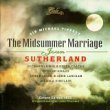
[178.1] A SUMMERY SLICE OF TIPPETT HISTORY

Disc: The Midsummer Marriage
Composer: Michael Tippett
Conductor: Sir John Pritchard
Label: Gala
Catalogue Number:
Released: 2000, 2005 (CD: ADD)

The Midsummer Marriage is redolent of Michael Tippett at his most enticingly lyrical and invitingly opaque. That said, if you are looking to explore the riches or eccentricities of his marvellous first opera in detail, I wouldn't start here. The sound quality requires some aural excavation. But once you have absorbed Colin Davis's definitive Royal Opera House account (Lyrita SRCD2217, 1995), this radio broadcast of the first performance at Covent Garden - conducted by John Pritchard and produced by Christopher West on 27 January 1955 - is well worth the investment. And for fully-fledged Tippett aficionados, it's obviously essential.
There's vigour, feeling and commitment in Pritchard's pioneering rendition. What it occasionally lacks in polish it makes up for in freshness - something the age of the recording cannot wither. Mezzo soprano Oralia Dominguez's Sosostris is one of the standout performances for me, very much capturing the magical theatricality which Tippett intended. (With a repertoire stretching out from Monteverdi to Wagner, she also worked with Pritchard on a fine Coronazione di Poppaea, recorded by EMI.)

The voice-overs for the radio audience only really become obtrusive during the Ritual Dances - with the first also frustratingly orphaned on disc one. In fact this is probably the most disappointing aspect of the performance, in that the intricacy of Tippett's contrapuntal imagination is dulled and subdued at some vital moments of orchestral intensity.
But such shortcomings should not be allowed to detract from the inherent virtues of this recording. Not only does it capture an important moment in twentieth century musical history, it also shows that Tippett's music - sometimes portrayed as dryly intellectual or obscure - is, at its heart, expressive and warm, inviting us not just to view the world but to relish it in all its glory and pain.

Comment on this post: NewFrontEars

Friday, April 07, 2006

[177.2] QUESTIONING BARENBOIM

In the aftermath of his first lecture (see my blog below), Daniel Barenboim responded to a range of questions from audience members at the Cadogan Hall in West London.

The politician and pundit David Mellor asked about music as a way of changing the world, not just understanding it. How is that going, and how would we measure its progress, he asked?

Responding with specific reference to the East-West Divan Orchestra [pictured], composed of young Israelis and Palestinians, Barenboim talked of “the conditions of equality”, musical subversion and “listening to the other voices”. On its own a “utopian republic” of music is not enough. The “note of the enemy” must be heard and understood in terms of an alternative narrative. The work of the East-West Divan Orchestra is not to give each other comfort but to understand the nature of music as an integrated system with its potential for re-situating difference.

Steve Martland (composer) enquired about the role of the living composer in this scenario. Barenboim replied, to laughter, “to write good music”. Today you write with the same 12 notes that every single composer before Bach did. The power of music has nothing to do with contemporaneity. The difficulty today is that very few people practice music. (He illustrated this by playing Schoenberg on the piano).

Julian Lloyd Webber (cellist) asked whether there was a danger of some educationalists assuming that because children are from certain ethnic backgrounds – say in inner city schools - somehow classical music is not for them? Naturally Barenboim agreed that this would be a foolish thing, referring to his own experience of breaking boundaries on the West Bank.

Willard White (bass) spoke about compulsion and voluntarism in relation to music education. The response was that it is not a matter of free will, but about offering a grounding which makes proper decision-making possible. “First you have to know about it.”

Asked by a researcher “how far down” he considers musical value to extend, Daniel Barenboim suggested that knowledge (understanding) is the distinguishing issue. In some cases little is required, the response is instinctual. But often guidance is needed to “live” the music. He contrasted a waltz or popular song with the complexities of Schoenberg.

Presenter Sue Lawley interjected: “Do you accept then, Daniel Barenboim, that, that, that pop music can have that same transcendental power that you were describing that Western classical music has?”

The mercurial reply, at once humorous, generous and highly directional, was… “If you feel it, how wonderful for you!”

Well-known (and classically trained) Jazz pianist Julian Joseph asked about the role of improvisation in the process of music as Barenboim is expounding it – and was told, presumably to his agreement, that it is the highest form of artistic expression, an unpremeditated but dedicated state of consciousness.

Lesley Garrett (soprano) talked about her children’s bombardment with images, and asked how they could be guided to really hear sound. She was told that the situation was worse than this – in our culture we are anaesthetised against music through the musak that permeates of society at large.

“In English you have this wonderful difference between listening and hearing, and that you can hear without listening, and you can listen and not hear. Not every language has that.”

So, Garrett responded, does that make opera the ultimate art form, a perfect unity of the visual and the aural? “Nonsense! In opera people look but don’t listen!” (laughter).

Neuroscientist Lloyd Parsons said that his research indicated that the performance of music effected within the brain a distinction between mental processing and emotional awareness, say through the rendition of Bach. Some areas of the brain were activated, others not. Barenboim declared that in music you can control, for a moment, time – and also the life and death of a note. In this there is a sense of transcendence on a journey which is, in a way, longer than the temporality of a human being.

“You can control life and death of the sound, and if you imbue every note with a human quality, when that note dies it is exactly that, it is a feeling of death. And therefore through that experience you transcend any emotions that you can have in their life, and in a way you control time. I mean, we all know that when we are born, two minutes seem like two hours. And when we're interested, two hours are two seconds.”

James Macmillan (composer) referred to Julian Johnson’s controversial and provocative book ‘Who Needs Classical Music?’ He asked whether it was its ability to rise above the mundane, to evoke the possibility of a secret irreducible to commonality, and the illustrate the fact that the universe is not a closed system which lies at the heart of the refusal of ‘serious’ music in a debased culture? Barenboim declared his determination to resist the moralising of music in the discourse of elitism and anti-elitism. Music is innocent, but imbued. He then talked about the orchestra as the natural forum for discovering democracy – though not democratic in its own right.

“[T]he human being is not courageous by nature, and the human being always likes to blame something else - somebody else or something else - and therefore [s/he] says classical music is elitist, classical music is transcendent. I'm sorry, classical is none of that, classical music is nothing until it comes into contact with a human being.”

A music therapist, Alison Levine, asked about “the early stage of how we are in music”. Children, said the conductor, after some repartee about child prodigies, learn more discipline from rhythm than from being ordered around. The first associations with sensuality come through realising that passion and discipline need each other in musical experience. “We have to make music and we have to teach our children from the beginning the connection between music and life.”

An aside followed on music and political process, in which Barenboim’s dialogues with the late lamented Edward Said (specifically on Israel-Palestine and the Oslo process) were, unlikely though it seems, paralleled with issues in the performance of Beethoven’s Pathetique – producing a kind of cross-disciplinary interpretative dissonance, giving way to fresh perceptions of harmonic possibility in different realms. Well, that’s how I’m hearing it. The transcript and podcast will enlighten further.

A brave psychologist concluded by asking what Daniel Barenboim would play if he had one minute to live, and would he play it now…? To laughter and with momentary bemusement, Barenboim responded by saying that he preferred “to play every concert as if it was both the first and the last.”

Comment on this post: NewFrontEars
[177.1] IN THE BEGINNING WAS SOUND

Here’s a first. NFE blogging live from the BBC Radio 4 broadcast of the commemcement of the 2006 Reith Lectures. This globally recognised series of talks is, for the first time, given by a world class conductor and pianist, Daniel Barenboim [pictured] – presently director and conductor of the Chicago Symphony Orchestra, the Berlin State Opera and the East-West Divan Orchestra. [Biographical note]

Barenboim’s subject is “the inexpressible continent of music and the inexpressible continent of life”, in a set of reflections being offered in London (Introduction ... understanding and describing the importance of music), Chicago (the hegemony of sight over sound in contemporary culture), Ramallah (the integrating figure of the musician) and Jerusalem (the difference between power and strength).

He began by noting that Busoni claimed music to be“sonorous air” – a precise definition which says everything and nothing. But why is music so important, formative and powerful? Before entering the realm of interpretation, Barenboim chose to pay attention to the objective nature of sound giving rise to “the first note” and to a piece of music which “becomes, rather than is”.

Hearing music is therefore something like joining a train which has already started. An immediate relation is created between “sound” and “silence”. Does one simply displace the other? No. There is energy in sound which sustains its purpose for a time in a way analogous to the establishment of an object in relation to the grounding force of gravity. Then it disappears. There is a fight to the death against a “power of silence” (cf. Castenada) . Each note will die. Thus the entire tragic basis of the nature of the musical enterprise.

"You must forget for a moment, please, that there are such things as technologically developed devices which permit to maintain this sound artificially so, and this is no ungratefulness to the radio, to the recordings, to the CDs and all other means that we have to preserve the unpreservable, but the fact remains that when you, even in the old days when you had a gramophone recording and you put the needle on the record, the sound was suddenly there."

Barenboim went on to talk of “the science of emotion”, that is, the interplay between passion and feeling – drawing on the ethos of the philosopher Spinoza. “If music is sound with thought then talent is a very poor weapon”, he suggested. There must be much more than this if a real connection is to be made between music and our capacity to understand the condition of life.

Spinoza was a religious scholar, a political architect, a philosopher, who aspired to geometric demonstration of the universe and the human being in it, and he was a biological thinker who advanced the science of emotion. And there lies of course one of the great difficulties of making music, the science of emotion. How do you play with passion and with discipline? Having realised all of this, I saw that there was a need for knowledge, and these much abused words 'He is so musical' was absolutely senseless because talent is certainly not enough...

All this has brought me to the conclusion that I am very unhappy, and for a long time, about the place of music in society. This is the part that I will try to explore further in the next lectures. Music can and from my individual point of view should become something that is used not only to escape from the world but rather to understand it.

Nb. The Reith Lectures are available as a video, in transcript and as podcasts from the BBC. I've decided to blog the beginning of the series in order to see how their immediacy relates to a more studied view; to experience them in their raw state. There is also an online discussion.

Comment on this post: NewFrontEars

Monday, March 20, 2006

[176.1] BOULEZ HONOURED

At last the ISM has done its duty to one of the true giants of modern music. And not before time. The Herald newspaper in Scotland writes: "If one man is synonymous with twentieth-century music in Europe it is Pierre Boulez. A former chief conductor of the BBC Symphony Orchestra and in the pit for crucial productions by the Royal Opera and Welsh National Opera, he has also been an important feature of Brian McMaster's Edinburgh Festivals. It is a tribute to his lasting enfant terrible status, however, that it has taken until now for him to join Sir Peter Maxwell Davies, Sir Simon Rattle, Sir Michael Tippett, Sir Colin Davis and Sir Charles Mackerras in receiving the Incorporated Society of Musicians' Distinguished Musician Award, an honour announced this week. M Boulez was born in 1925."

Comment on this post: NewFrontEars

Saturday, March 18, 2006

[175.1] MOZART IN DA HOUSE

No doubt Glyndebourne will gain ridicule, respect, incredulity and indifference in roughly equal proportions for their hip-hop version of Mozart's Cosi Fan Tutte, which plays tonight in Lewes, UK, and then travels to Helsinki, Finland, and Tallinn, Estonia, in June 2006. Whatever the final critical judgement (and bear in mind that worthy 'youth opera' Zoe was praised in performance and then panned on Channel 4) I think this adventuresome idea deserves praise for its intentions and concept. After all, RSC have been rapping Shakespeare for years -- and in a narrowcast, broadband culture where artforms are readily stereotyped and ghettoised, it's good to have hip-hop and opera out, proud and phat in School 4 Lovers. Or should that be "Schl4lvrs"?

Comment on this post: NewFrontEars

Wednesday, March 15, 2006

[174.1] IMAGES OF ETERNITY

"I know that my true function within a society which embraces all of us, is to continue an age-old tradition, fundamental to our civilization, which goes back to pre-history and will go forward into the unknown future. This tradition is to create images from the depths of the imagination and to give them form whether visual, intellectual or musical. For it is only through images that the inner world communicates at all. Images of the past, shapes of the future. Images of vigour for a decadent period, images of calm for one too violent. Images of reconciliation for worlds torn by division. And in an age of mediocrity and shattered dreams, images of abounding, generous, exuberant beauty."

(Michael Tippett, from Moving Into Aquarius)

Comment on this post: NewFrontEars

Saturday, March 11, 2006

[173.1] QUOTA

"Music is the only language in which you cannot say a mean or sarcastic thing." (John Erskine)

"It seems to me that those songs that have been any good, I have nothing much to do with the writing of. The words have just crawled down my sleeve and come out on the page." (Joan Baez)

"Art is a house that tries to be haunted." (Emily Dickinson)

Comment on this post: NewFrontEars

Thursday, September 22, 2005

[172.1] EARLY MUSIC AND ALL THAT JAZZ

Erica Jeal's Guardian review of the recent South Bank Early Music Festival makes me wish I had been able to be there, even if I'm not sure that she's grasped just how free improvisation can be. Ornette Coleman, take a bow. Anyway, she writes: "The theme of the weekend was improvisations, and, whether in 21st-century jazz or a 17th-century chaconne, those demand a predictable chord sequence. So it was no surprise that Sunday's concert by Berlin's outstanding Akademie für Alte Musik contained a few more repetitions of La Folia, the baroque era's answer to the 12-bar blues, than strictly necessary. But the group radiated warmth in Vivaldi and Geminiani as well as some more unusual gems, including Georg Muffat's Sonata no 5. Two high points involved only a few players: a Sinfonia by Corbetta for theorbo, guitar and virtuoso cello, and Biber's Passacaglia in G for solo violin, with which Midori Seiler held the audience rapt."

"The final concert teamed the viols and psalterion of L'Arpeggiata with the Italian jazz clarinettist Gianluigi Trovesi and folk singer Lucilla Galeazzi for an off-the-wall programme of songs - including a few foot-tappers by Galeazzi herself - and dance improvisations that showed how similar these three traditions actually are. There were moments when the members of L'Arpeggiata seemed jazz musicians manqués, keener to let their hair down than the slightly restrained Trovesi. In their version of Pozzi's Cantata Sopra il Passacaglio, it was Trovesi who supported flights of fancy from the countertenor Philippe Jaroussky rather than the other way round. Jaroussky, a singer to watch, hammed up the same cantata gamely for the self-consciously jazzy version that brought the weekend to a celebratory close." [See also: Early Music Network]

Comment on this post: NewFrontEars

Friday, September 09, 2005

[171.1] QUOTA

“Music is language removed from words”

(Mike Brierley, in the midst of an interesting BBC Radio 3 programme on the muse of the conductor.) True if one does not take too much account of the intrusions of the critic on wordless wonder...

Comment on this post: NewFrontEars

Monday, August 29, 2005

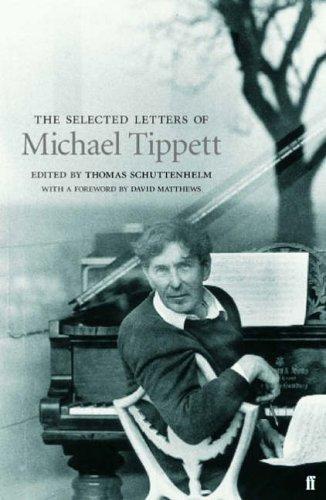
[170.1] TIPPETT'S SELECTED LETTERS UNVEILED

Although I haven't had a chance to see the book myself yet, composer Michael Berkeley has what looks to be a fair appraisal and overview in The Guardian of what one might well expect from the long-awaited The Selected Letters of Michael Tippett, edited by Thomas Schuttenhelm and with a foreword by scholar David Mathews (Faber, 2005).

Berkley writes of one excerpt that it is "quintessential Michael Tippett as I remember him, articulating a profound thought but then, as though intellectually dyslexic, digging himself into an ever deeper and more impenetrable grave as he allowed his tongue and mind to wander over disparate ideas. You began in the Home Counties and within seconds appeared to be surveying a lunar landscape. Recording an interview with Tippett was an absolute nightmare because, for all his charm, he was almost impossible to edit. Seemingly unconnected ideas joined seamlessly together to defy even the sharpest razor blade."

Well indeed. Though that word "seemingly" is an important qualifier. Tippett was rather less articulate, but just as mercurial, when his pen was crafting words as he was when they were forming musical notation. But it is important not to be deceived by the apparently chaotic assemblage in either form. There is often profound communication going on, and in the case of the music, very elaborate structure .

This, of course, is Tippett's centenary year. Regrettably, because of other commitments, I've got to precious few performances so far. I hope to rectify that before 2005 is out. For it is terribly sad that this great and quixotic composer (and man) should have seemingly fallen out of critical favour so soon after his death in 1998, and it is to be hoped that the current attention augurs well for his future recognition.

Meanwhile, Ashgate Publishing are offering £35 off the £50 cover price of the collection Michael Tippett: Music and Literature, featuring Edward Venn, Arnold Whitall, Suzanne Cole and others. And although Amazon lists the Selected Letters as out on 15 September 2005, you can order a copy, for £23 (£2 off the r.r.p.) with free UK postage and packing, by going to guardian.co.uk/bookshop or calling the Guardian book service on 0870 836 0875.

Some related recent articles from The Guardian are as follows
09.01.2005: Feature: Reaching the Tippett point
03.05.2005: Review: The Knot Garden, Linbury Studio, London
02.03.2005: Review: LSO/Davis, Barbican, London
01.03.2005: Review: Tippett Weekend, Bridgewater Hall, Manchester
06.01.2005: Review: Tippett at 100, Wigmore Hall, London
18.12.2004: Feature: Michael Berkeley pays tribute to Michael Tippett

In passing, I note with sadness the last public performance by The Lindsay Quartet, who championed Tippett's music (and his hero Beethoven's) alongside other considerable achievements.

Comment on this post: NewFrontEars

Tuesday, August 23, 2005

[169.1] SOUND A LA MOOG

Sad to hear of the passing of Robert Moog, whose synths inevitably impressed themselves on my sound world in the 1970s. Whatever dubious uses have been made of his technology (and there have been more than a few) he is up there with Russian inventor Leon Theremin and others as a pioneer in the gamut of electronic music traversing fields as different as musique concrete, modern expermentalism, jazz and art rock.

As Allan Kozinn observed in the New York Times (today): "At the height of his [instrument's] popularity, when progressive rock bands like Yes, Tangerine Dream, Kraftwerk, and Emerson, Lake and Palmer built their sounds around the assertive, bouncy, exotically wheezy and occasionally explosive timbres of Moog's [synthesisers], his name (which rhymes with vogue) became so closely associated with electronic sound that it was often used generically, and incorrectly, to describe synthesizers of all kinds."

The Moog company's particular specialty was the Ethervox a version of the theremin [pictured, with Robert Moog], an eerie-toned instrument, created in the 1920s, which allows performers to create pitches by moving their hands between two metal rods.

Bob's family has established The Bob Moog Memorial Fund dedicated to the Advancement of Electronic Music in his memory. Many of his longtime collaborators, including musicians, engineers and educators, have agreed to sit on its executive board. For more information about the foundation, contact Matthew Moog at mattmoog@yahoo.com.

Comment on this post: NewFrontEars

Sunday, July 17, 2005

[268.1] MICHAEL TIPPETT STRIKES A LONDON CHORD

This from Ekklesia:

The first night of the BBC Promenade Concerts, considered to be the greatest classical music festival in the world, began at the Royal Albert Hall last night [15 Jyly 2005] with a stirring performance dedicated to those who died in the London bombing on 7 July 2005 – and with a work emotionally connected to those terrible events.


Michael Tippett’s anti-war oratorio A Child Of Our Time asks why humankind inflicts such brutality on itself. There is a commemorative peace plaque dedicated by its composer just yards away from the site of the Tavistock Square bomb that killed fifteen people last week.

The concert programme had been drawn up months ago, but the BBC Symphony Orchestra’s conductor for the night, Roger Norrington, drew attention to the poignancy both of Tippett’s work and also of Edward Elgar’s Cockaigne (cockney) Overture, ‘In London Town’.

Norrington told concert-goers and a large television and radio audience that in spite of the recent tragic events, he hoped Britain’s capital would remain an open city, “tolerant towards everyone accept those who come here to kill us.”

Michael Tippett, who died in 1998, is one of Britain’s most distinguished composers. The centenary of his birth is being celebrated this year. He was a lifelong campaigner for peace and justice, and in 1994 he unveiled a granite stone, barely 100 yards from the site of the bus explosion, to commemorate conscientious objectors to war. He served a three-month prison sentence himself for refusing military service.

A Child Of Our Time, written in 1944, takes its cue from the events leading up to the terrible 1938 Nazi kristallnacht pogrom, notably the assassination of a German diplomat by a 17-year-old Jewish boy.

Loaded with both biblical language as well as Jungian imagery, the libretto (text) also features five powerful African-American spirituals instead of Bach-like chorales. It is perhaps the first post-Christendom oratorio (opera-like work on a religious theme), reflecting Tippett’s alienation from what he saw as the patriotic militarism of prevailing Christian mores.

However, there is also a strong theme of hope: “Here is no grieving, but an abiding hope”, sing the soloists and chorus towards the end. Tippett’s integration of what are popularly called Negro Spirituals (‘Steal Away to Jesus’, ‘Nobody Knows the Trouble I see, Lord’, ‘Go Down, Moses’, ‘O, By and By’ and ‘Deep River’) was daring at the time, demonstrating a deep respect for black resistance to slavery and oppression.

In 2001 Tippett’s orchestration of the Spirituals was sung in a rapidly and drastically amended programme for the Last Night of the Proms, which came just four days after the 9/11 twin towers attacks in New York. Last night’s precise but emotional performance of A Child Of Our Time was given by the BBC Symphony Orchestra and Chorus with international singers Indra Thomas, Christine Rice, Ian Bostridge and Willard White as the soloists.

The BBC Proms season continues until Saturday 10 September, and features 74 concerts plus ancillary events.

Comment on this post: NewFrontEars

Saturday, July 02, 2005

[267.2] MAKING MUSIC HISTORY

Can't say that there's much in the Live 8 line up that thrills me musically, with the exception, perhaps, of the mercurial Bjork. But the Make Poverty History cause of debt relief, trade justice and appropriate aid for the worlds' poorest nations is one I am more than happy to endorse.

"When the power of love becomes stronger than the love of power, we will have peace," declared Jimi Hendrix. Well, it might take a bit to get there, but there's no point not starting.

Play on.

Comment on this post: NewFrontEars

Saturday, June 25, 2005

[267.1] SMOKE AND MIRRORS

Yes, I know. NewFrontEars has been irritatingly absent in one of its periodic hiatuses occasioned by the intrusion of other aspects of life and work. I've been considering calling it a day, but music is too central to my existence and documenting it to rewarding and generative to give up straight away. I 'go freelance' from 1 July 2005, and my intention is to develop a plan (including a redesign and possibly some writing partners) around August. So don't expect much before then.... though you never know. I'll try to keep you posted.

Comment on this post: NewFrontEars

Sunday, February 06, 2005

[266.1] ELECTRONICS ANONYMOUS LIVE

Unfortunately I'm down in Devon, UK, at the moment, and so can't take advantage of this tip-off.... but I see that there is a live and free Electronics Anonymous performance tonight, at at the Electricity Showrooms Bar, Hoxton, London, from 5pm to midnight. It features experimental electronic music plus experimental short films. There will be live performances by Sudden Infant [Switzerland] and Filter Feeder [UK]. Definitely worth checking out if you are in the vicinity.

Comment on this post: NewFrontEars

Friday, January 21, 2005

[265.1] MICHAEL TIPPETT: COMPOSER FOR OUR TIME

I am hugely looking forward to the English National Opera performance, tonight, of Michael Tippett's choral work, A Child Of Our Time. I almost wrote 'oratorio', and ineed this is the closest formal category to which it belongs. I have seen it described as 'a secular oratorio', but that isn't quite right, either.

Tippett, whose spiritual leanings were at once traditionally sceptical and romantically Jungian, was no straightforward 'believer', certainly. He respected many Christians but was rightly critical of what had been and was done in their name. And he wasn't one for metaphysics.

But by replacing the Bachian chorales with fantastically orchestrated African-American spirituals, he disclosed what faith might look like set free from its trdaitional moorings and facing up to the horrors of genocidal war. He also demonstrated a global consciousness at a time when it was far less usual, paying homage to 'those twentieth century blues' (the title of his autobiography).

Some critics remain snooty towards A Child of Our Time. We live in a cynical age. It is definitely the one work by Tippett, in his early lyrical phase, which has come close to being a 'war-horse' (sic!) of the classical tradition. But in spite of its popularity it is a tremendously powerful and coherent work - as deserving of major performance as it is of the regional repertoire.

What a fine way to mark the Tippett centenary. Well, a start, anyway. There's much more to come in 2005, and NFE will be following it closely.

Comment on this post: NewFrontEars

Monday, January 17, 2005

[264.1] A DAY IN THE LIFE - SHOUT

One of the most enjoyable end-of-year concerts I sampled was the two-night residency of exotic vocal ensemble The Shout, featuring - among others - my friend Adey Grummet, the soprano, writer and conductor. They were 'classical gig of the week' in The Independent newspaper, and got this good write-up from John L. Walters in The Guardian (see below pic).


"Originally brought together as a vehicle for the compositions of Orlando Gough and Richard Chew, the Shout's 15 singers make a virtue of their divergent backgrounds. The resulting a cappella sound - broad, rich, thrilling - has meant that the ensemble has remained unclassifiable: too awkwardly multicultural for a bench at the high table of classical music; too unpredictable to become teatime TV favourites; too tuneful to be cool. They're so good it's possible to take them for granted."

Comment on this post: NewFrontEars

Monday, December 06, 2004

[263.1] MAX AND HARRY GO MAD IN BOSTON?

This from the Boston Globe, as a prelim to an article introducing forthcoming composer highlights. Check it out here.

“With the death of Sir Michael Tippett in 1998, Sir Harrison Birtwistle and Sir Peter Maxwell Davies became Britain's senior knights of music.

“It's a little early to hail Birtwistle and Maxwell Davies as old masters; each is only 70 and still highly active. From the beginning each was a vigorously antiestablishment figure -- a shocked Benjamin Britten walked out of the premiere of Birtwistle's opera 'Punch and Judy' in 1968 -- and neither has exactly been domesticated yet.

“Maxwell Davies has been a frequent visitor to Boston, and his music is often performed here. Birtwistle's music remains relatively unfamiliar to local audiences despite intermittent efforts by Collage New Music, Boston Musica Viva, and the Tanglewood Festival of Contemporary Music.”

But plans are afoot to change that, it seems.

Comment on this post: NewFrontEars

Tuesday, November 30, 2004

[262.1] LOBBYING FOR GARBAREK?

Am I going soft? My current listening pleasure includes the seductive tones of saxophonist Jan Garbarek’s latest offering, In Praise of Dreams (ECM, 2004). Long courted by fame and popularity (since his surprise hit with the Hilliard Ensemble, Officium), Garbarek ploughs his own moody, evocative furrow - regardless of it all.

Of late he has faced accusations of blandness, conservatism, high-class lobby-music and self-pastiche. It’s not difficult to see where the detractors are coming from. But then it’s also not difficult to feel the enjoyment of his sensuous, sinuous melodic inventions.

Garbarek’s recent UK concerts have attracted wildly different estimations. In Edinburgh alone, he attracted the admiration of Kenny Mattheison (The Scotsman): “Garbarek’s steely, keening sonority on both his instruments remains one of the most distinctive and attractive signature sounds in contemporary music, and this quartet is an ideal vehicle for it. His roots in jazz remain apparent, but are only part of an intricate interweaving of folk, ethnic, rock and classical influences that make up the flow of his music. His simple, folk-like melodies and clean musical textures can seem a little too clinical at times, but there is no doubting the musicality and invention of the players.”

Whereas Rob Adams (The Herald) was left with a very different sensation: “The first two segments of a two hours-plus set … were routine, passionless and rather twee. …Those moments when the other three sit down and give the fourth member the spotlight should be the audience's cue for a breather, as pianist Rainer Brunninghaus conjures up a kind of rhapsodic candy floss and Eberhard Weber does his 'my bass is auditioning for Dr Who' schtick. This may once have been amusing, now it's just silly.”

Adams’ praise is reserved for percussionist Marylin Mazur, a musician of undoubted dexterity, enterprise and invention. Then again, when I last heard her with Garbarek a few years ago (at the Royal Festival Hall), she drove me to distraction with her constant busy-ness and interference with the other instruments’ accents.

The album, it has to be said, is a more considered affair. But that too may be good or bad. You’ll have to decide, dear listener.

Comment on this post: NewFrontEars

Saturday, October 16, 2004

[261.2] MICKELTHWAIT'S MUSINGS

I came a cross a new (to me) blogospheric musical voice a couple of weeks ago, via a lively piece on the Shostakovitch controversies. "Culture means whatever Brian Micklethwait says it means", the writer reassures us. His scope is entertainingly broad -- and in addition to the main site, he's thoughtfully indexed all his classical music musings in one category archive. Nifty. Much more of a predeliction for Mozart and so-called libertarianism than me, for sure; but the writing has soul and intelligence. At least Mickelthwait's not just going through the e-motions.

Comment on this post: NewFrontEars
[261.1] MAX'S NEW NAXOS NEXUS

Composer: Peter Maxwell Davies
Work: Naxos Quartets Nos. 1 and 2
Media: CD
Genre: Contemporary classical
Catalogue Number: 8.557396
Label: Naxos
Released: October 2004

My current listening pleasure is the first release in a projected 5-cd series from Naxos: world premiere recordings of ten new string quartets performed by the superlative Maggini. What a creative idea it was for the high-quality budget label to commission this set.

These pieces are part of Maxwell-Davies' much-publicised turn from major orchestral works and larger scale projects towards the intimacy and challenge of small ensemble writing; congruent in many ways with the atmosphere of his beloved Orkneys.

Up-to-date information on the composer's activities is available through the MaxOpus site. You can also purchase recordings of Max's music by digital downloads and/or CD compilations of your own choice delivered by post.

As Anthony Holden economically observed in, er, The Observer: "Elegant, accessible, full of mood swings, these inventive works begin [Maxwell-Davies's] long journey in a classical Orcadian landscape, via Beethoven, Haydn, Chopin and Scottish dance music, to a powerful interim resolution with echoes of Bartok and Berg."

There are echoes in there (for me at least) of Kodaly's evocative Kreutzer Sonata.

Comment on this post: NewFrontEars

Friday, October 15, 2004

[260.1] NOT-SO-DUMB METAL

Though I'm not a regular viewer of Jools Holland's UK tv show 'Later', I still enjoy it as a lively presentation of near-mainstream (but slightly quirky) rock, world, nu-pop and outside-left folk. The intrigue tonight was privided by US thrashists Green Day and their election anthem, 'Idiot America'.

The song made its biggest impact after John Kerry's appearance on 'Letterman'. Commented Salon: "Playing with murderous precision, the band signaled from its first line that they weren't out to be good sports. The sound was turbulent, churning, big and tight, veering off into guitar whirlwinds and then snapping to attention in an instant. Standing in a line across the stage as if they were a firing squad, the band communicated the feeling of both being on the front line and laying out a deadly line of attack."

This from Pitchforkmedia: "Idiot's slicing power chordage reaches to Green Day's old English and Cali punk influences with tingling fingers, adds acoustic instruments without sounding forced or contrived, and lyrically grapples with the cultural predicaments and awkward shittiness of 'subliminal mind-fuck America,' circa 2004: 'Now everybody do the propaganda/ And sing along in the age of paranoia.' Armstrong delivers the title track couplet like a command at the revolution day sock-hop, and its instrumental viciousness is enough to shatter punchbowl glass."
Not my usual listening ambient. Maybe it's just that overwhelming desire to evacuate the world of GW....

Comment on this post: NewFrontEars

Saturday, October 09, 2004

[259.2] GRAMEX GOES GRAND

People who hunt for classical records and CDs in the London area can hardly fail to know about Gramex, the wonderfully eccentric haunt in Lower Marsh, the market location a stone's throw away from Waterloo Station. Usually stocked with around 5-600 cds, often newly-minted from reviewers and remainders, they have come into a goldmine recently: an 11,000 strong collection. For the first time it has pushed the shop into an alphabetical system. We'll see how long that lasts! There are many treasures to be had at bargain proces. Get down there as soon as you can... Oh, and don't forget Neil's Barrow either...

Comment on this post: NewFrontEars